Wax, Bristles, and the Names Beneath: A Morning With Ohio's Headstone Rubbing Circle
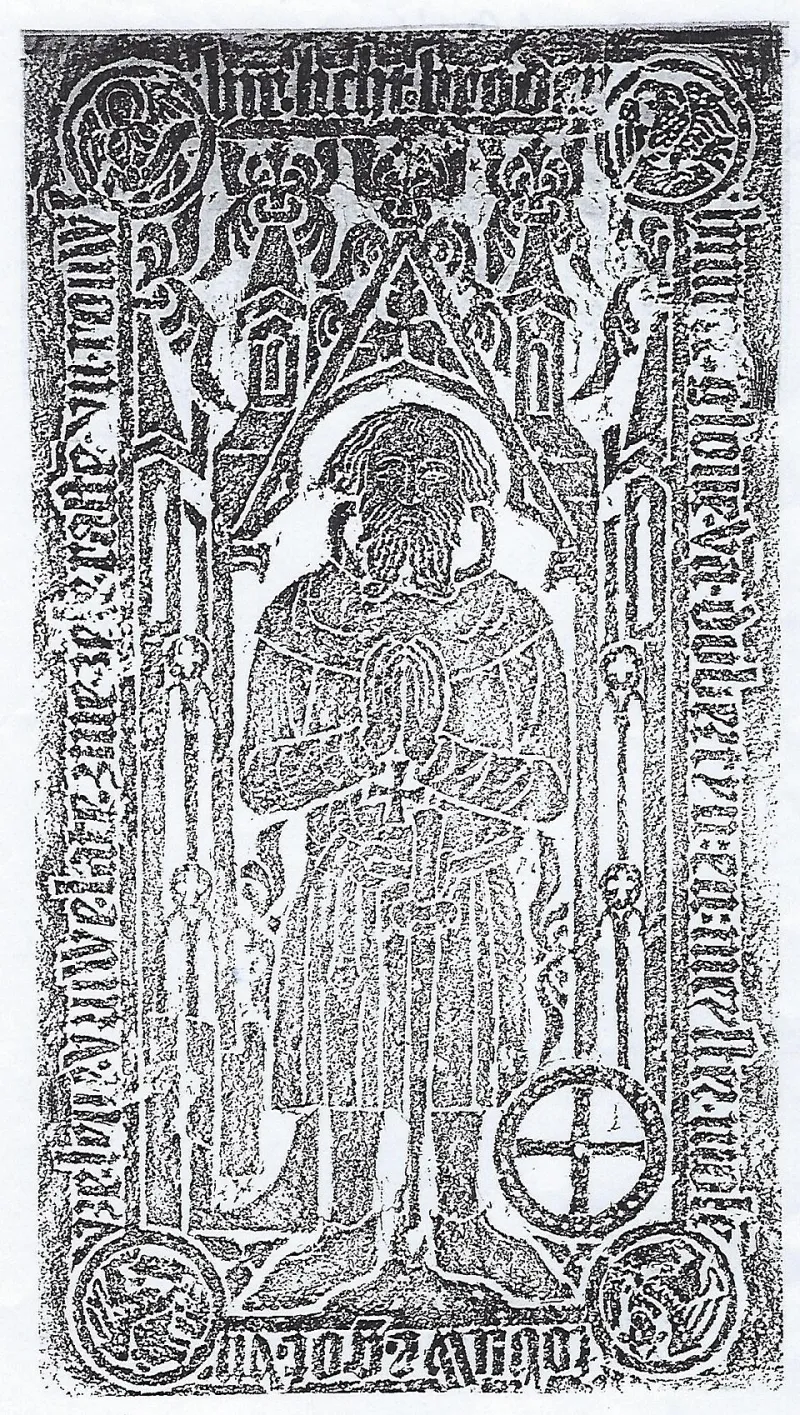
Photo: Unknown authorUnknown author, Public domain, via Wikimedia Commons
The first thing Margie handed me was not paper or wax. It was a rule.
"Don't touch anything you wouldn't touch if the person's family was standing right behind you," she said, then poured me a cup of coffee from a steel thermos that had seen better decades. We were standing in a small cemetery outside Wilmington, Ohio, on a Saturday morning cold enough that the grass crunched. Around us, six people in fleece jackets and garden gloves were unloading tote bags onto folding tables. This was the monthly gather of a gravestone rubbing circle — a hobby that sounds Victorian and looks, at first glance, like a very polite tailgate.
I had come to make a rubbing. I left with wax under my fingernails, a folder of paper ghosts, and a new appreciation for the uneasy line between honoring old stones and wearing them down.
The Kit Is Smaller Than You Think
A gravestone rubbing is exactly what it sounds like: paper laid over an engraved stone, then worked with a soft brush and a wax cake until the letters and carvings rise up in relief. The supplies are cheap and specific. Most of the group uses a lightweight Japanese paper — thin but tough — held down with blue painter's tape. The wax comes in cakes the size of a hotel soap, usually black or gold. The brush is soft, the kind you might use for dusting a keyboard, and the whole technique is less about scrubbing and more about coaxing.
Dale, a retired shop teacher from Clinton County, demonstrated on a flat marble marker from the 1840s. He taped the paper at the corners, pressed it gently into the carving with his palm, then began working the wax in small circles. Within a minute, a name appeared: ELIZA. Below it, a date, and below that, an epitaph so worn I could only make out the word "gone."
"You're not trying to press hard," Dale said. "You're trying to let the paper find the shape. If you feel yourself getting aggressive, stop. The stone is older than you and me together."
The Rules Nobody Writes Down
The formal rules vary by cemetery. Some allow rubbings with permission. Some forbid them outright. Some don't have a policy at all, which is its own kind of gray area. The group I joined keeps a binder of contact names and a loose agreement: only rub on stones that are stable and flat, never on marble that's already sugaring or flaking, never on anything with active damage. They avoid unreadable stones because pressing hard to find a name is how you lose one.
Then there are the unwritten rules. Don't lean on headstones. Don't sit on them. Don't move flowers or flags. Don't make a rubbing of a grave that still has fresh dirt. And always, always write down the cemetery name, the row, and the plot number before you leave, because a rubbing without a location is just a pretty piece of paper.
"We're not ghost hunters," Margie said, not unkindly. "We're not making art out of somebody's sadness. We're documenting what's there before the weather takes it."
The Quiet Gray Area
That documentation argument is where the hobby gets complicated. Many preservationists now discourage rubbing altogether, pointing out that even soft wax and gentle pressure can lift flakes from old stone. Some cemeteries have banned it. Others tolerate it because the people doing it tend to be the same people who report vandalism and pick up trash. The group I joined was careful to a fault — they carried soft brushes for cleaning dust off stones, not scrubbing, and they took photos of every marker before and after.
Still, the ethics are not settled. A rubbing is a contact sport with history, no matter how light the touch. The compromise most of these folks have landed on is simple: rub only what is already flat and stable, never force a name that doesn't want to be read, and leave the cemetery better than you found it. It is not a perfect answer. It is a respectful one.
What You Carry Home
By noon, I had made three rubbings. One was a child's stone from 1851, the letters so shallow I could barely feel them. One was a Civil War-era marker with a willow tree carved into the top. The last was a plain stone for a woman named Rebecca who died at 34, with an epitaph that read, in part, "She was a friend to all."
None of them are worth money. They are not rare. They are not even particularly beautiful, unless you count the way wax catches the light in thin white lines. But they are evidence. They are the kind of thing that would survive a house fire in a folder and a flood in a plastic bin, and they are the reason a small group of Ohioans gets up early on a Saturday to kneel in wet grass with soft brushes and cheap paper.
As I packed up, Margie handed me a label for my folder. At the top, someone had written the group's name in careful marker. Below it, in smaller letters, were the initials OH Wa FG — the same ambiguous acronym that shows up on this website and, apparently, on the occasional barn. Nobody in the group could tell me what it stood for. They just shrugged and smiled and said it was good enough for a Saturday morning.
I drove home with the windows cracked, a folder of paper ghosts on the passenger seat, and the strange, quiet feeling that I had spent the morning at a potluck where the guests were all dead and the host was a very old stone.