Seven Days, Six Post Offices, One Letter: Inside Ohio's Slowest Mail Club
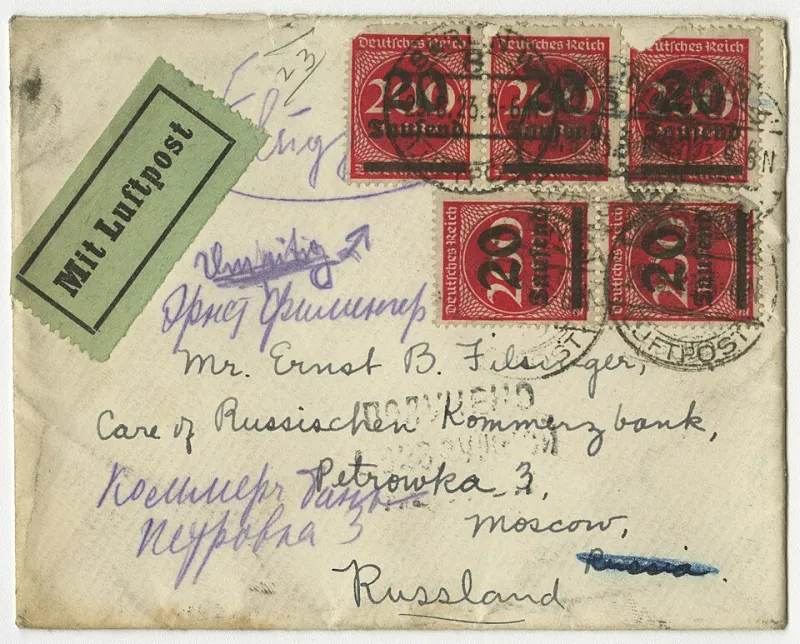
Photo: Teasdale, Sara, 1884-1933, Public domain, via Wikimedia Commons
There's a postmark from Mars, Ohio, sitting on my desk right now. It took seven days to get here from a town forty minutes away, and that's exactly how the sender wanted it.
Welcome to the world of slow mail — a small but stubborn corner of the hobby universe where the goal isn't speed, efficiency, or convenience. The goal is the journey. And in Ohio, one club has turned that journey into something between a scavenger hunt and a pilgrimage.
What Exactly Is 'Slow Route' Mail?
The concept is deceptively simple. Instead of dropping a letter in a big-city collection box where it gets whisked into automated sorting and arrives tomorrow, members of the Columbus-based Squirrel Mail Postal Club route their correspondence through a chain of small post offices — places like Charm, Sugar Grove, and yes, Mars — each one adding a postmark, a delay, and a story.
A letter might travel a hundred miles to cover twenty. It might get hand-canceled by a postmaster who has time to chat. It might sit overnight in a one-room office while the whole town's mail fits in a single tray.
"The postal service is a miracle and we've all agreed to ignore that," laughs club founder Doreen Whitlatch, who started the circle in 2019 after a retirement-era pen pal exchange got out of hand. "Anybody can send an email in two seconds. It takes real commitment to make a letter take a week."
The Journey of One Envelope
To understand the appeal, you have to follow a letter. Club members gave us permission to track one — a plain white envelope addressed to a member in Columbus, stuffed with a recipe, two stamps (one decorative, one functional), and a note reading "take the long way."
Day one: it's dropped in Mars, a Butler County hamlet that proudly shares a name with the red planet and leans into it with a space-themed community sign. The postmark alone is worth the trip; collectors call a Mars cancellation a "bucket list" item.
Day two and three: the envelope hops to a rural office in southwest Ohio, where the postmaster reportedly hand-cancels it with a wavy line because the machine broke in 2011 and nobody's in a hurry to fix it.
Day four: a detour through a village office that's only open four hours a day. The letter waits. Nobody minds.
Days five through seven: a slow drift north, each postmark layering on the last like tree rings, until it lands in a Columbus mailbox looking — honestly — kind of beautiful. Wrinkled, stamped, stamped again, marked "missent" once for good measure.
"That's a perfect run," Whitlatch says when we show her a photo. "Some letters come back with more stamps than words."
Why Forty People Are Unplugging One Stamp at a Time
The club has around forty active members, ranging from a retired mail carrier in Zanesville to a high school junior who joined after finding the group through a stamp-collecting forum. What they share is a suspicion that convenience has sanded the texture out of everyday life.
"When everything is instant, nothing is an event," says member Ray Okafor, who estimates he's sent over 300 slow-route letters. "When my granddaughter gets one of these, she knows somebody thought about her for a whole week. That's the message. The words are just the receipt."
There's a practical charm to it, too. Small post offices benefit from the foot traffic and the novelty. A few members plan entire weekend drives around dropping letters in scenic spots — Hocking Hills in the fall, Lake Erie towns in summer — so the mail and the memory travel together.
How to Start Your Own Slow Letter
You don't need a club to try this. The club's unofficial rules, scrawled on a whiteboard at their monthly meetup at a Columbus coffee shop, are a good starting point:
- Pick a small post office — the smaller, the better. Ask nicely; rural postal workers are usually delighted.
- Add something physical. A pressed leaf, a recipe card, a sticker from your town.
- Never use tracking. Watching the letter is cheating.
- Write back. Always. The chain only works if it keeps moving.
The club meets on the second Saturday of each month, and newcomers get a starter kit: stamps, a list of Ohio's most postmark-worthy villages, and a warning that once you've received a letter that took a week to arrive, regular mail starts to feel a little hollow.
As Doreen puts it: "We're not against the internet. We're just for the long way home."
If you find a well-traveled envelope in your mailbox with half a dozen postmarks and a note asking you to keep it going — congratulations. You've been squirrel-mailed. The only rule is to keep it moving.