Ribbon Hunting: How to Survive (and Maybe Win) Ohio's Strangest Fair Categories
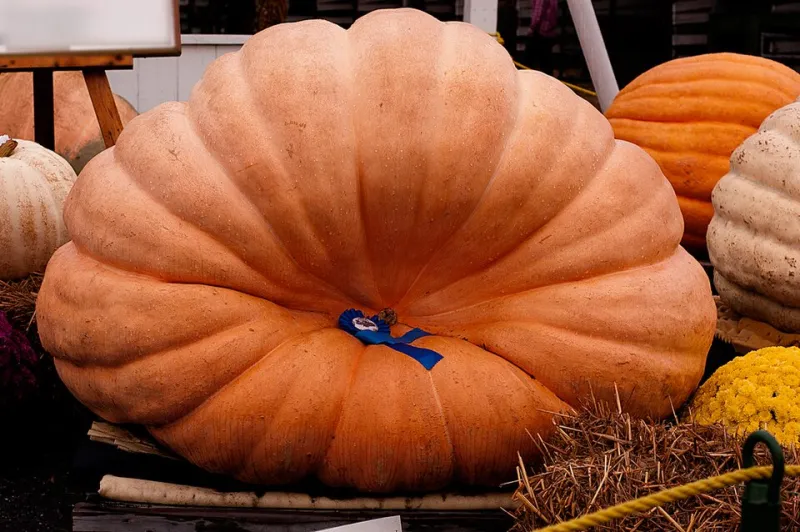
Photo: cloud2023, CC BY 2.0, via Wikimedia Commons
Every August, somewhere in Ohio, a grown adult is staring at a pumpkin the size of a compact car and wondering if it will make weight. Another is fluffing a hand-knitted scarf under fluorescent exhibit-hall lighting. A third is nervously explaining to a judge why their compost bin smells the way it does.
Welcome to fair season, the most under-appreciated competitive sport circuit in the state. If you've only ever hit the fair for the butter cow and the funnel cake, you're missing half the show. The exhibit halls and weigh-off pads are where Ohio's weirdest, most dedicated hobbies live — and the barrier to entry is lower than you think.
The Giant Pumpkin Industrial Complex
Let's start with the heavyweight division, literally. Giant pumpkin weigh-offs are held at fairs across Ohio, and the state's competitive growers are dead serious about it. We're talking Atlantic Giant seeds with provenance like racehorse bloodlines, secret soil recipes, and shade structures that go up in June.
"People think you just water it," one longtime grower told us, laughing. "You don't just water it. You're managing a vine like it's a small business."
For newcomers, the entry path is simple: check your county fair's premium book (yes, that's what the rulebook is called) in early summer, note the entry deadline, and show up with something heavy. You will not beat a 1,800-pound pumpkin your first year. That's fine. The crowd cheers for effort, and every giant-vegetable judge has a soft spot for a scrappy 300-pounder from a rookie patch.
Compost, But Make It Competitive
Yes, Ohio fairs judge compost. Entries are typically evaluated on texture, color, moisture, odor (the good kind of earthy, not the bad kind of garbage), and evidence of decomposition. Some extension offices even run workshops in spring specifically so beginners can build a bin worth ribboning by fall.
The insider tip here is consistency: judges want uniform crumb structure, not a bin that's half-finished banana peels and half black gold. Turn your pile regularly, keep it moist like a wrung-out sponge, and document your process. A photo board of your pile's journey has swayed more than one judge.
Scarecrows, Quilts, and the Exhibit Hall Gauntlet
The indoor categories are where the real variety hides. Scarecrow contests ask for creativity, sturdiness, and — per one fair's rulebook — "appropriate display posture," which is either charming or ominous depending on your read. Quilting, canned goods, floral arrangements, and photography all follow the same general structure: drop-off day, judging day, and then a week of strangers peering at your work under signs that say "Do Not Touch."
The universal rules, according to exhibitors we spoke with:
- Read the premium book. Every year someone is disqualified for a jam that isn't in a standard jar or a quilt that exceeds size limits.
- Label everything. Unidentified entries in canning categories get tossed on principle.
- Enter multiple categories. Veterans spread their bets. Nobody wins Best in Show with a single tomato.
- Be there for judging if it's open. Some categories interview exhibitors; poise counts.
Why Bother?
The prize money rarely covers the seeds, and the ribbon is, well, a ribbon. But ask anyone who exhibits and you'll hear the same thing: it's about the people. Fair competitions are one of the few places where a retired teacher, a teenager with a 4-H project, and a guy who talks to his squash daily all end up in the same conversation.
So grab the premium book this winter. Pick one weird category. Worst case, you get a funny story. Best case, next August, someone's staring at your pumpkin wondering how you did it.