Trilobites Before Breakfast: A First-Timer's Field Guide to Digging Up Ohio's Ancient Past
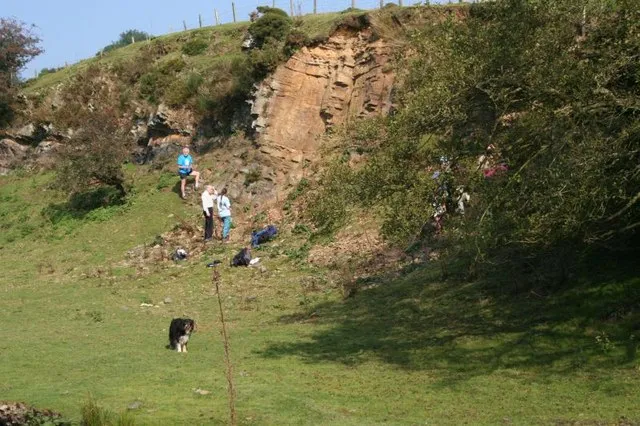
Photo: Bill Nicholls, CC BY-SA 2.0, via Wikimedia Commons
Here's the thing they don't tell you about Ohio: the entire western two-thirds of the state used to be ocean floor. Warm, shallow, crowded with creatures that had never heard of corn. When that sea drained away, it left behind layer after layer of limestone and shale, packed with fossils — and those layers are exposed in practically every creek cut and roadcut in the state.
Which means you can walk into a streambed outside Cincinnati on a Saturday morning and walk out holding the 450-million-year-old remains of an animal that predates dinosaurs, trees, and land animals generally. Legally. For free. In many cases, wearing your regular shoes.
This is rock hounding, and Ohio is quietly one of the best states in the country for it.
Know the Rules Before You Dig
Let's get the legal stuff out of the way, because the fastest way to ruin the hobby is a citation.
Private land: Always get written permission. A handshake helps, but a signed note in your pack helps more. Most farmers will say yes if you ask politely, offer to close gates, and don't show up during planting season.
State parks and state nature preserves: Collecting is prohibited in Ohio state nature preserves, full stop. In state parks, surface collecting of rocks and minerals is generally allowed for personal, non-commercial use, but digging is not — check the specific park's rules or call the office. When in doubt, ask. Rangers would rather answer a phone call than write a ticket.
Metroparks and county parks: Rules vary wildly. Columbus and Franklin County metro parks generally prohibit collecting; some county parks allow it. Look it up per-park.
Roadcuts and creek beds: The great gray area. Creeks on public land or with public access points are often fair game for wading and surface picking, but the banks may be private on both sides. The classic advice: if you're standing in the water, you're probably okay; if you're climbing a fenced bank, you're probably not.
Where to Actually Go
Caesar Creek State Park (Waynesville): The crown jewel. The park maintains an official fossil-collecting area in the emergency spillway, and all you have to do is stop at the welcome center, watch a short orientation, and get a free permit. The Ordovician-aged exposure there is loaded with brachiopods, bryozoans, crinoid stems, and the occasional trilobite. It's the single best legal, beginner-friendly site in the state.
Cincinnati-area creek beds: The city sits on the famous Cincinnatian series, arguably the most fossil-rich Ordovician strata on Earth. Dry Dredgers, the Cincinnati fossil club, runs field trips to sites that have produced scientifically significant finds from ordinary members.
Olenella and trilobite country: Ohio's state fossil is Isotelus, a giant trilobite, and specimens turn up in southwestern Ohio shales. You won't find a museum-quality giant on your first trip — but a partial tail plate is a very realistic first-day prize.
Flint Ridge (Licking and Perry Counties): Different flavor entirely. Ohio flint — the state gemstone — was quarried by ancient Native Americans at what's now Flint Ridge Ancient Quarries & State Memorial. Surface collecting rules apply, but the rainbow-colored flint chips scattered around the area are a knapper's and collector's dream.
Your local creek: Seriously. Anywhere the bedrock pokes through in central Ohio, you've got a shot at crinoid stems, horn corals, and those pencil-shaped belemnites. Learning to see fossils is the real first skill.
The Season-by-Season Checklist
Spring: Best of the year. Snowmelt and rain scour creek beds clean, exposing fresh material. Water's high, so go after it drops. Bring waterproof boots.
Summer: Long days, low water, great visibility. Go early; shale bakes hard in the sun and mosquitoes don't. Sunscreen, hat, more water than you think.
Fall: Second-best season. Leaves down means better visibility on banks. Comfortable temps for long sessions. Watch for hunting season — wear blaze orange on rural sites from October on.
Winter: For the dedicated. Bare trees and snow cover actually make fossils on exposed shale easier to spot, but creek work is miserable. This is club meeting season — join now, field trip in spring.
The Gear Rundown
You don't need much. Honest.
- Sturdy footwear with grip (old sneakers are fine; flip-flops are how ankles break)
- A small hammer and cold chisel for prying — or just your hands and a sharp eye for day one
- A backpack with newspaper or paper towel for wrapping fragile specimens
- A phone with a GPS app to mark your best spots
- Buckets or a five-gallon pail for hauling, if you get serious
- Safety glasses the moment a hammer is involved. Non-negotiable. Rock chips travel.
Total startup cost: under $40. Compare that to literally any other hobby.
Find Your People
The secret weapon of Ohio rock hounding is the club network. Groups like the Dry Dredgers in Cincinnati, the Columbus Geological Society, and clubs scattered through Dayton, Toledo, and Cleveland run monthly meetings, ID nights where experts tell you what you actually found, and — most importantly — field trips to private and permission-only sites you'd never access alone.
And here's the reassurance for the nervous: every single one of these clubs has a story about a first-timer who found something spectacular on trip one. It's practically a hazing ritual in reverse. Nobody expects you to know a brachiopod from a bryozoan. You will by the end of the day, and you'll be the one explaining it to the next nervous newcomer.
Bring a bucket. Wear the bad shoes. The sea's been waiting 400 million years — it can wait one more Saturday for you to show up.