Smoke Signals From 88 Counties: Our Reader-Powered Map of Ohio's Backyard Burn Piles
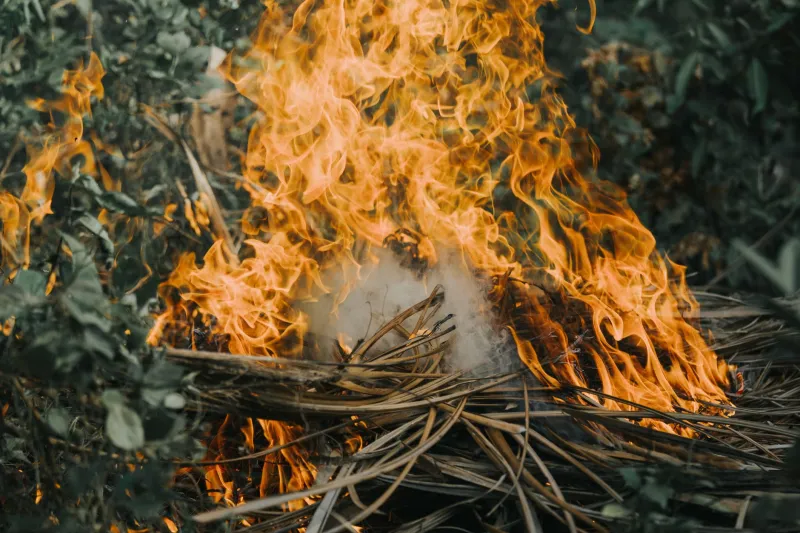
Somewhere between the last s'more of September and the first frost, a quiet question landed in our inbox: does anybody still do this? The 'this' being the annual fall leaf-and-brush bonfire — the kind your grandpa lit in a gravel corner of the yard while the smoke chased the kids off the fence line.
We figured the answer was 'nobody.' We were wrong. Just barely.
The Call-In That Got Out of Hand
We put a phone number and a P.O. box in the October newsletter and asked one thing: tell us where the burn piles still burn. Within two weeks we had 214 responses. Farmers from Darke County. A retired firewarden in Ashtabula. A woman in Marietta who keeps a spiral notebook of every bonfire her street has held since 1987 — dates, weather, whose couch was sacrificed.
We plotted every pin on a big paper county map that now lives in the OH Wa FG office, coffee-ringed and annotated in four colors of marker. Some patterns jumped out fast:
- Southeast Ohio burns more. Athens, Meigs, Monroe, and Washington counties reported the densest concentration of annual pile-burners, mostly tied to orchard and property cleanup.
- The suburbs burned out. Franklin, Cuyahoga, and Hamilton counties showed almost nothing — not because people don't want to, but because ordinances don't.
- The northwest is weird about it. A band of counties along Route 30 reported 'smudge fires' — slow, smoky leaf burns that one Defiance reader swore were 'for the mosquitoes' despite there being no mosquitoes in November.
What's Actually Legal (The Part Nobody Agrees On)
Here's where we ruin the romance a little, but only a little.
Ohio's open burning rules run through the Ohio EPA and local fire departments, and they generally boil down to this: burning yard waste like leaves and brush is restricted in many urbanized townships and cities, and outright banned during air quality alerts. Outside those zones, residential burning of plant material is often permitted — with the landowner's permission, a clear area around the pile, and someone standing right there with water until it's dead out.
March through May carries extra restrictions in unincorporated areas because of wildfire risk, which is why the October window matters so much to the folks on our map. It's the last open stretch.
The honest advice: call your fire department. Not the non-emergency line the day of — a week ahead. Every fire chief we spoke with said the same thing: the people who call ahead are the people who never have a problem. One chief in Vinton County told us he's brought marshmallows to approved burns. That's the relationship we're talking about.
The Firewardens, the Hobbyists, and the Guy With the Thermometer
The best part of this project was the people. In Hocking County we met a retired volunteer fire captain who has appointed himself the county's unofficial 'burn advisor' — neighbors text him a photo of their pile and he texts back a verdict. Pile too big. Too close to the pine line. Perfect, light it at dusk.
In Logan, we found the hobbyist side of things: a small circle of guys who treat a good brush fire like fly-fishing. They talk about stack technique ('hollow core, green crown'), wind reading, and the exact moisture percentage of oak at which 'she'll sing.' One of them carries a meat thermometer to check pile internal temperature. He would not tell us his target number. 'Trade secret,' he said, dead serious.
And in Gallipolis, an extended family has held the same end-of-October fire for six generations. The current matriarch, 81, does the lighting. She told us the trick is to 'start small and let the fire earn its size,' which is advice that works for roughly everything in life.
A Grudging Safety Guide, Out of Respect
Look, nobody at OH Wa FG wants to be the hall monitor of a 60-year tradition. But the people keeping this tradition alive are also the ones who asked us to print this, so here it is, short and without lectures:
- Check first, burn second. Ohio EPA open burn rules plus your local fire department. Ten minutes on the phone.
- Distance is everything. 50 feet from structures is the common guideline for large piles — more if the wind's up.
- Never burn on red-flag wind days. If leaves are flying off the pile before you light it, you're not ready.
- Water at the pile, not in the garage. A charged hose or full buckets within arm's reach, until the embers are cold to the touch. 'Cold to the touch' means you touch it. With your hand.
- No construction lumber, no treated wood, no mystery cans. Leaves, brush, branches. That's the tradition anyway — the couch thing is a separate article.
The Map Lives On
The paper map is staying up through Thanksgiving, and we're still taking pins — mail us your county, your pile size, and your family's oldest bonfire memory. Next fall we'd like to print a proper version, county by county, with the firewardens' names on it.
Because the point of the roll call was never really the fire. It's the fact that 214 Ohioans picked up a phone to say: we still do this, and we'd like to keep doing it. That's a pile worth tending.