The Gust That Ate the Podium: A Rookie at Ohio's Leaf-Pile Games
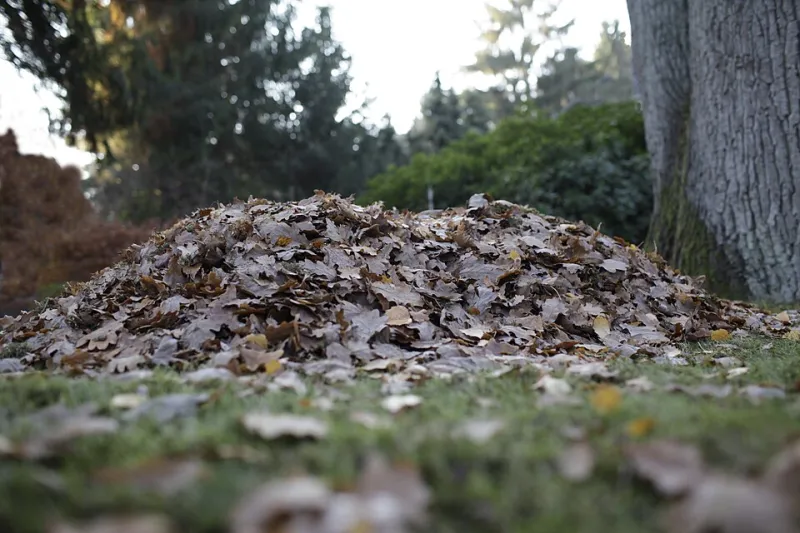
Photo: Jeuwre, CC BY-SA 4.0, via Wikimedia Commons
On the second Saturday of November 2026, the parking lot behind the Ashley fire station smelled like wet leaves and coffee. A folding table held a clipboard, a box of donuts, and a hand-lettered sign that read Leaf-Pile Olympics — Village Sanctioned, Mostly. I had come as a rookie entrant for OH Wa FG, which is a polite way of saying I own one rake and a questionable amount of confidence.
This is not a sanctioned sport. There is no entry fee, no trophy budget, and no one checking your raking form. What there is, instead, is a small Ohio village turning a chore into a Saturday morning institution. The categories are tallest pile, longest tunnel, cleanest curb, and a kids' jump-off judged by the public works crew. The winners get ribbons. The rest of us get leaves in our shoes and a story.
The rules are simpler than the trash talk
The rules fit on one side of a clipboard. Leaves must come from within village limits. No bagging until judging is done. Piles cannot include sticks, rocks, or anything that might surprise a bare hand. The public works department sets orange cones, a retired engineer handles the measuring tape, and everybody agrees that wind is an act of God and therefore counts against you.
That last clause matters. In leaf-pile competition, wind is not weather. Wind is opponent, referee, and occasional comedian. I heard three separate people say some version of the same line: You can rake all morning, but the gust decides the podium. They said it like farmers talking about rain.
My pile had a good run until it didn't
I raked into a tarp, dragged the tarp to my assigned square, and built what I believed was a respectable cone. Dale from the next street built his pile with a leaf blower and an air of superiority. You're building a pile, not a pancake, he told me. It was not even 9:30 a.m.
By 10:15, my pile had reached four feet three inches. I was not going to beat Dale, whose pile looked like a small brown mountain with a permit, but I was in the conversation. Then the wind came through the lot in one long push. My pile did not collapse so much as resign. Leaves scattered across the pavement, into the gutter, and onto the shoes of a woman who had clearly seen this before.
Dale's pile lost a foot and kept its shape. He won tallest pile at four feet eleven. He accepted his ribbon and said, It's about technique. I wrote wind in my notebook and underlined it twice.
The tunnel event rewards the quiet ones
The longest tunnel is the strangest category to explain to a first-timer. Contestants build a crawlable tunnel through a leaf pile, and judges measure the length while public works staff check for glass, sticks, and other hazards. Children are allowed to test the tunnel, which means the event briefly becomes a combination of engineering fair and recess.
A woman named Marguerite won with a tunnel built around cardboard concrete forms she had saved from a patio project. Her tunnel ran nine feet two inches. She did not trash-talk anyone. She just kept patting the sides of the pile until the judges called time. When the kids came through the far end, she looked like she had won something much better than a ribbon.
Cleanest curb is a public service
The cleanest curb category sounds like a joke until you hear the public works crew explain it. They are not looking for a decorative edge. They are looking at the gutter line, the storm drain, and whether your leaves are going to become somebody else's flooding problem. A retired school secretary with a whisk broom won by a margin that felt almost embarrassing. She said leaves in the storm drain cause backups, and everyone nodded like she had read the minutes from a meeting we all missed.
The kids' jump-off steals the show
The kids' jump-off is judged by the public works crew, which takes the job seriously in the way adults do when children are watching. Scores are given for splash, commitment, style, and whether the jumper emerges laughing. One kid did a cannonball. Another did something called a leaf angel. A third jumped so cautiously that the judges gave him points for safety and then gave him a second turn anyway.
The mayor showed up around noon. Somebody's grandmother yelled at a kid to tuck his shirt in. The fire station door opened and closed. For twenty minutes, the parking lot was the loudest place in the county.
Why a chore becomes a ritual
By one o'clock, the piles were scattered, the ribbons were handed out, and someone was already talking about next November. The Leaf-Pile Olympics do not raise money or break records or produce a highlight reel for anybody outside the village. They turn a chore into a reason to stand in a cold parking lot and learn your neighbor's name.
I went home with leaf bits in my hair and a fourth-place ribbon in my jacket pocket. The wind had won the tallest-pile event, but it had not won the morning. If you have a leaf-pile contest in your corner of Ohio, tell us. We at OH Wa FG are always looking for a good reason to bring a rake and stand around outside.